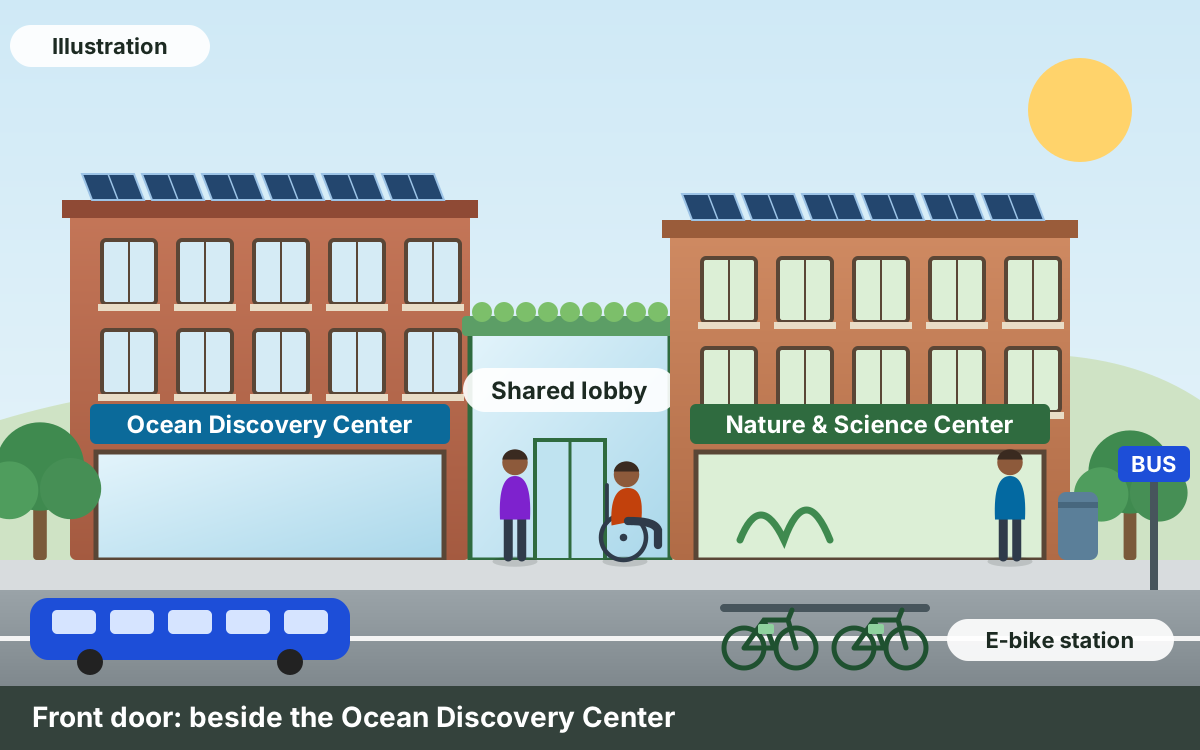
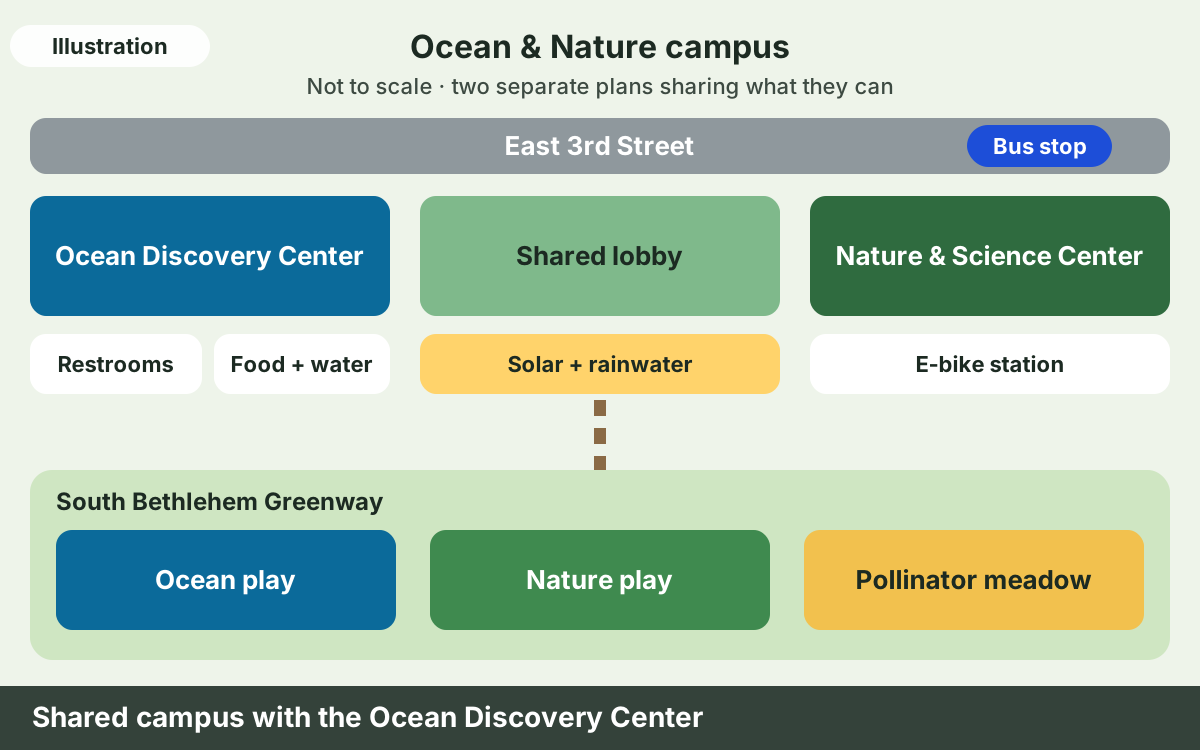
Planned for South Bethlehem, beside the planned Ocean Discovery Center. Main location being finalized.
Bethlehem Nature & Science Center
A planned place where kids, families and schools could meet small reptiles, grow a pollinator meadow, test the Lehigh River and do real science.
Planning phase. An independent plan; nothing is funded or built yet.
See the places
Small reptiles and amphibians
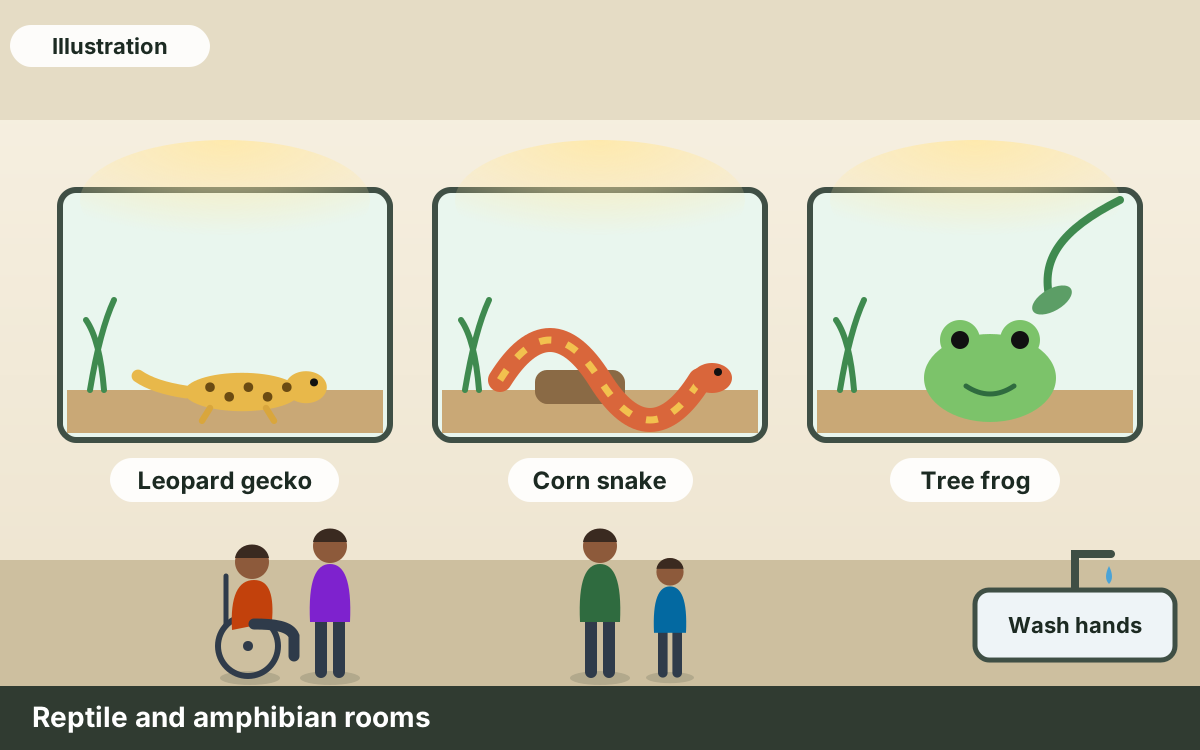
Rescued and captive-bred lizards, snakes, turtles and frogs in proper habitats, cared for by trained keepers and a reptile veterinarian. Never wild-caught, never venomous, never released.
Native pollinators, not beehives
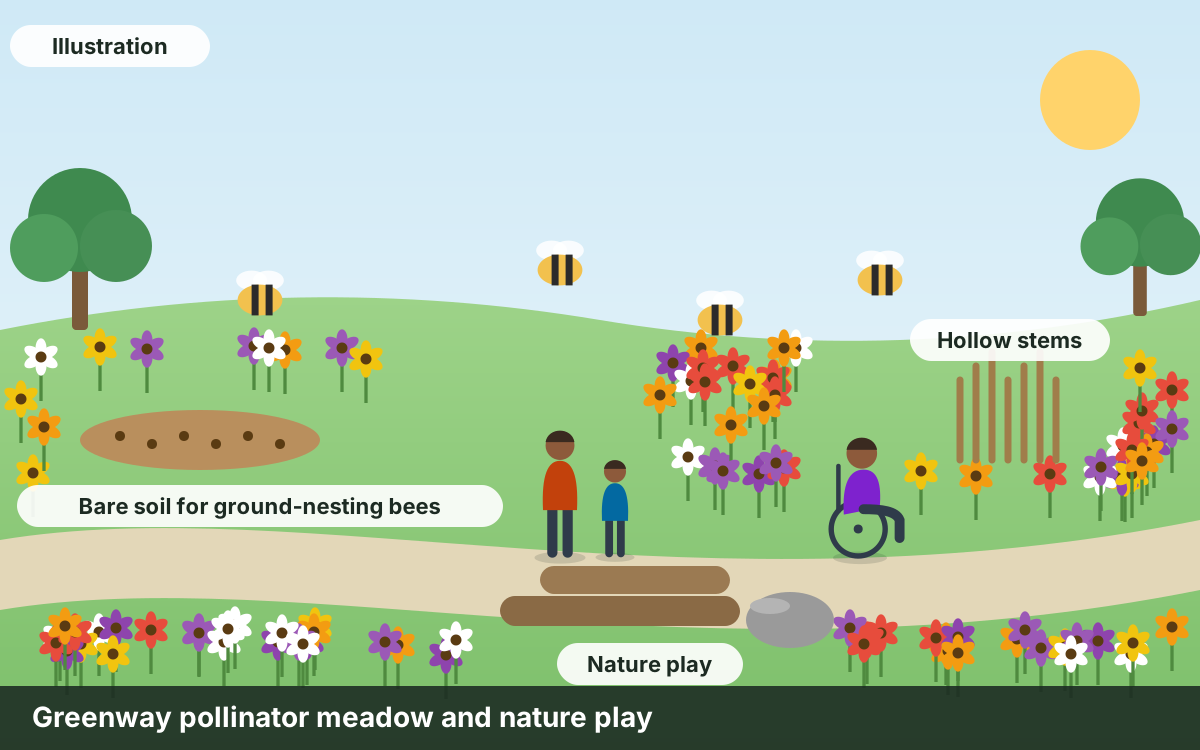
A native wildflower meadow and nesting spots for wild bees, so the center helps wild nature instead of competing with it.
River and stream science
Test the Lehigh River's water and count the insects that show how healthy it is.
Hands-on labs
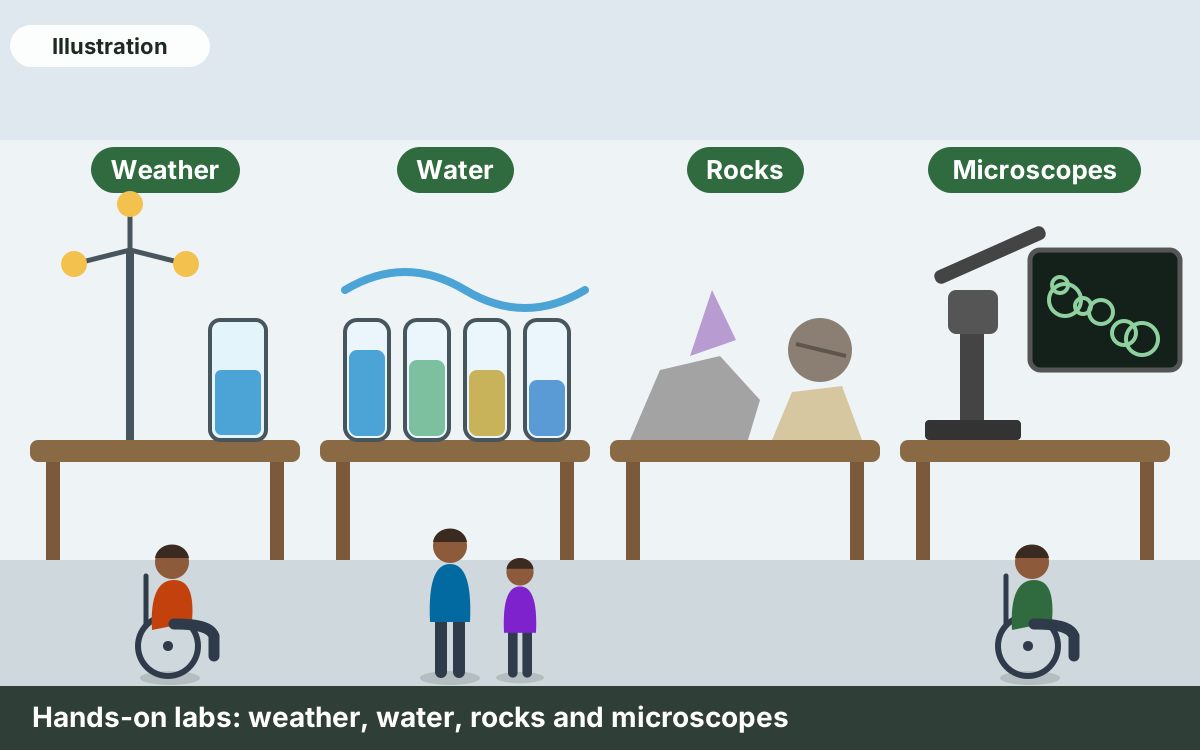
Weather, water, rocks and microscopes, with benches at seated height and screens everyone can see.
Citizen science
Count birds, frogs and bees, log rain, and add real records to national projects. Everyone who finds something gets the credit.
For the planet and the people
It protects wild pollinators, native plants, the Lehigh River and wild reptiles. Every entrance, lab and event has sorting points for recycling and compost, the building reuses salvaged materials, and food scraps and meadow cuttings become compost for the meadow.
Open to everyone
The aim is free entry; costs aren't set yet. Step-free, English and Spanish, quiet hours, and food and water at every event.
How it would happen
Each step starts only when the one before is safely done. No dates are promised.
- Plan and listen: share the plan, hear from neighbors, schools and nature centers, and confirm each permit.
- Outdoors first: with the City's written agreement, plant the meadow and run citizen-science walks.
- The building: once an owner agrees in writing, licensed professionals design and fit it out.
- Labs open: weather, water, rocks, microscopes and the maker bench.
- Animals arrive: only once habitats, the veterinarian, care plans and permits are all in place.
Read the summary · the longer summary · the one-page visual (PDF) · the full plan · status and sources